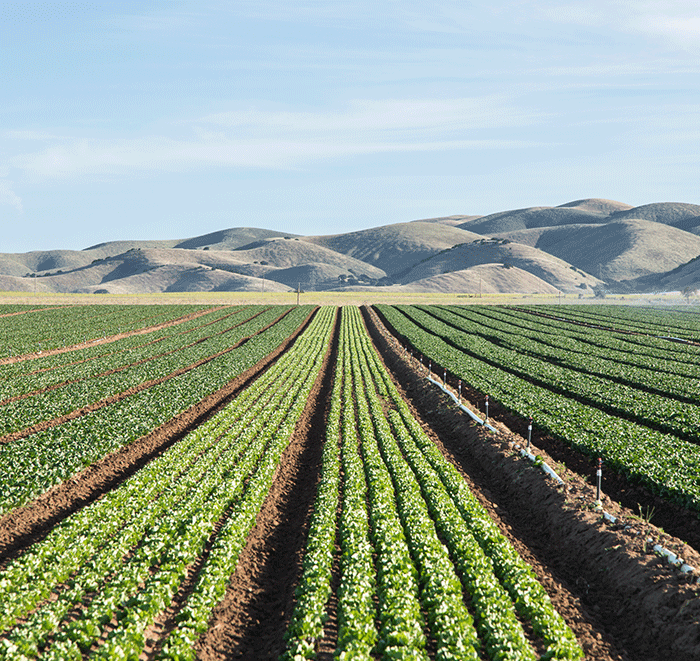
California’s agricultural waterscape is looking relatively grim for the 2022 irrigation season. Many growers will be making irrigation decisions with a limited water supply weighing heavily on their minds.
Alternaria is a fungal disease that is caused by multiple species including A. alternata, A. arborescens, A. tennuissima.
A new year is upon us and soon almonds will be breaking dormancy to kick off the 2022 growing season. As the proverbial question asks, which came first, the chicken or the egg? One might ask, which comes first, new roots or new leaves? As can be seen in the graphics below it is clear that immediately following bloom leaf out begins and after that, the first flush of spring root growth occurs (research conducted by Patrick Brown, et al).
The gap in fully understanding soil chemistry has always been a lack of data for the unseen portion of the plant: the root system and soil rhizosphere. This is where Trace Genomics—Wilbur Ellis’ impressive new offering in analytics—comes in.
Almond harvest is not only stressful for growers trying to deliver nuts to the processor—it’s also inherently stressful for the trees. For several reasons, it’s not uncommon for orchards to go through weeks of dry periods in which irrigation is withheld.
Traditional recommendations are to consider applications of up to about 20% of your annual nitrogen budget for pre- or post-harvest timing. However, this is not a universal recommendation. Likewise, post-harvest potassium has its own critical replacement rates.