
Hazelnut shells in Orchards
- Hazelnut shells support orchard soil management by improving moisture retention and field conditions
- Shell applications enhance nutrient cycling and increase soil organic matter over time
- Adjusting spring fertilizer programs is critical when using shells to account for nitrogen immobilization
Hazelnut processors are supplying shells for orchard application, and farmers are adopting this practice to improve orchard soil management and enhance nutrient cycling in both the short and long term. In the short term, shell applications can slow soil drying by reducing surface evaporation and can minimize mud and wet‑soil issues during field operations, improving orchard soil management. Over time, shells increase soil organic matter, thus improving moisture‑holding capacity, buffering pH changes, enhancing soil structure, and increasing nutrient cycling.
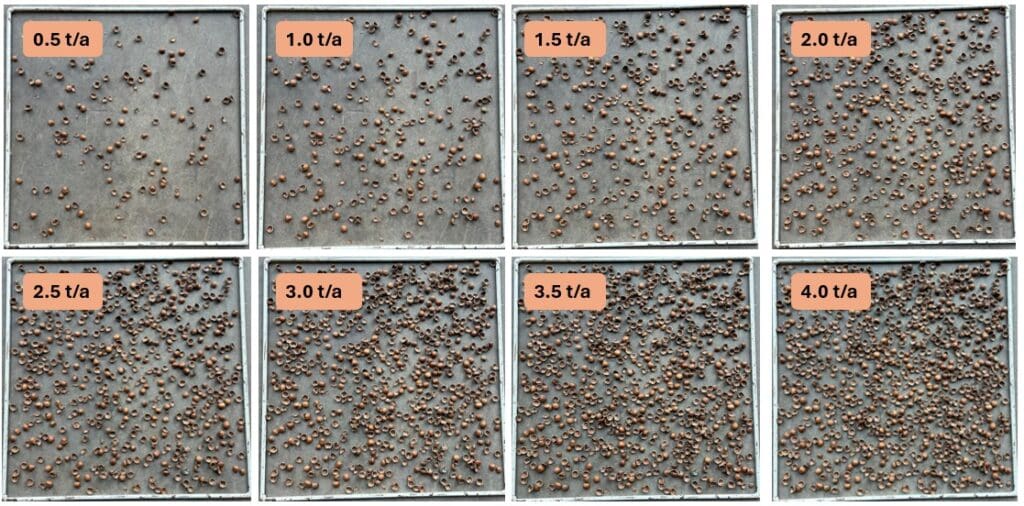
Many farmers are unsure of their application rates, which is important for adjusting spring fertilizer programs. Wilbur-Ellis research has shown that additional spring fertilizer nitrogen (N) is required to offset microbial N immobilization during shell decomposition, while potassium rates may be reduced because K in shells is readily leached into the soil rather than organically bound.
If you are using shells in your orchard, use the photo below to estimate the application rate of dry shells per acre as part of your orchard soil management plan.
Work with your Wilbur-Ellis agronomist to evaluate whether spring fertilizer adjustments are needed to support effective nutrient cycling.