


Harness the Power of Early Season Nitrogen Application in Almonds with TILL-IT N-POWER
S. Kaan Kurtural, PhD, Senior Agronomy Information Technology Manager
- Early season nitrogen fertilizer applications help support canopy growth and almond yield potential
- TILL‑IT N‑POWER reduces nitrogen leaching and improves nutrient-use efficiency in almond orchards
- This almond tree fertilizer combines NDURE DCD and PURIC technologies to extend nitrogen availability
- Proper almond fertilizer timing helps maximize returns and reduce nitrogen losses
As another growing season is beginning, we are getting ready to break dormancy in almond orchards to commence the 2026 growing season. Prior to root growth flush, immediately following bloom, leaf out begins in almond orchards. This is an important time to evaluate nitrogen fertilizer applications and ensure your almond fertilizer program is aligned with crop demand.
Understanding Early Season Nitrogen Fertilizer Needs in Almonds
The nitrogen needs of nut trees such as almonds cannot be met with foliar fertilizer alone, making a well-timed almond tree fertilizer program essential for early season growth. Therefore, soil-applied fertilizers are used to meet the demand. However, growers need to be cognizant of the fact that nitrogen fertilizers applied prior to bloom have no effect on bloom, early leaf growth and shoot expansion.
Remobilization of nitrogenous compounds is entirely driven by nutrients stored over winter from last year’s fertility program. Soil nutrient uptake will not occur until trees are active and leaves are transpiring. Without a transpiration stream pulling in soil moisture and the soluble nutrients contained in the root zone, there is no nutrient uptake. As depicted in Figure 1 below, there must be enough leaf expansive growth for root growth to happen.
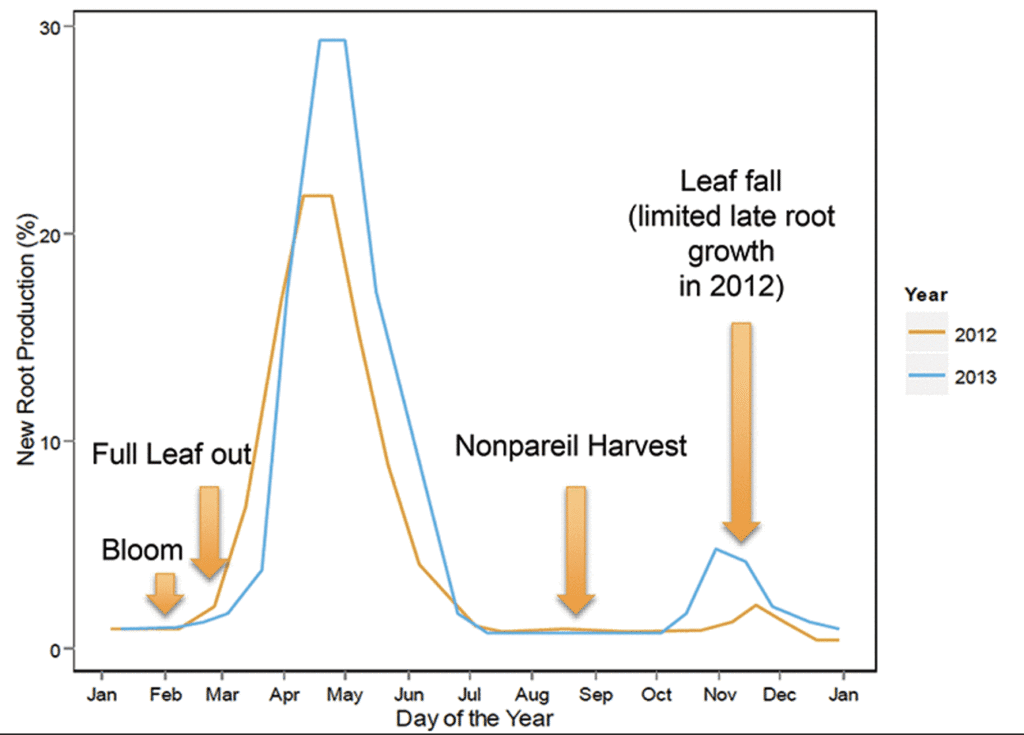
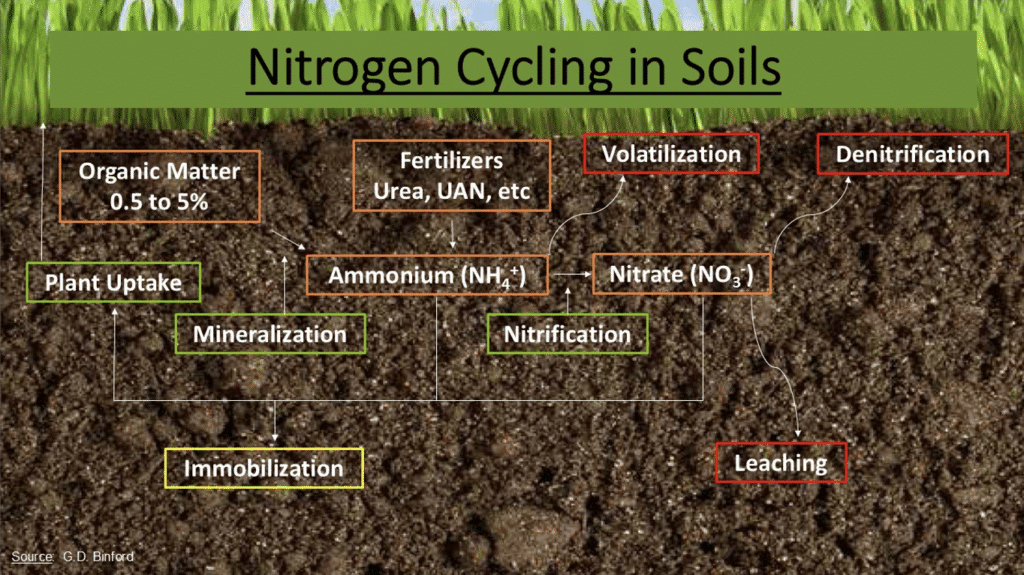
The timing and placement of nitrogen fertilizer to support canopy growth, hence fruit growth is important. Typically, growers have used UAN 32 as an almond fertilizer to support the early season growth. UAN fertilizer is composed of three forms of nitrogen: 25% ammonium, 25% nitrate and 50% urea. For every 1000 lbs. of kernels removed 68 lbs. of actual nitrogen is removed from the orchard. Nitrogen applications should be made in correlation to when the tree will use the Nitrogen. For early season applications 20% of the annual nitrogen budget should be scheduled between the end of bloom and full leaf out. However, UAN is subject to losses due to nitrogen leaching, volatilization, and denitrification as depicted in Figure 2 below.
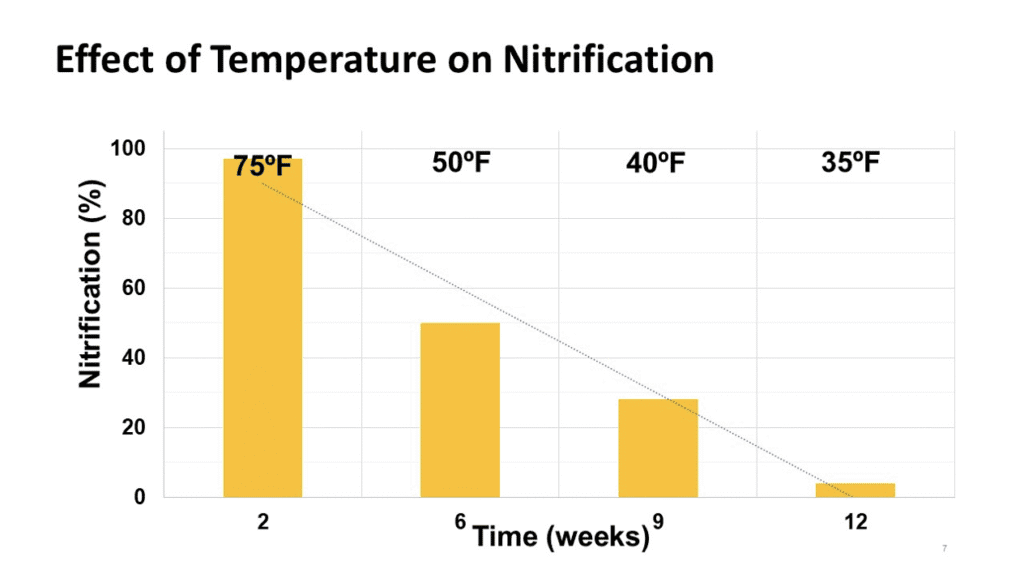
Furthermore, the temperatures during which UAN fertilizer is applied exacerbate the nitrification and nitrogen losses further in California (Figure 3).
Reducing Nitrogen Leaching and Improving Nitrogen Fertilizer Efficiency
So, what is in our control in delivering nitrogen fertilizers in the early season?
| Factor | Can We Control This? |
| Nitrogen Use Efficiency Factor: Can we increase this %? | YES |
| Mechanism of losses: Can we prevent these losses from occurring? | YES |
| Can we control weather and Mother Nature? | NO |
| Is it possible to minimize risks and maximize returns? | YES |
| Do we have any other sources of nitrogen available? | YES |
TILL‑IT® N‑POWER® is an advanced nitrogen fertilizer designed to reduce nitrogen leaching and denitrification through DCD technology. This almond fertilizer helps keep nitrogen available longer in the root zone.
This results in longer-lasting ammonium where the fertilizer was placed in the berm. TILL-IT N-POWER also includes PURIC® technology combined with DCD technology, resulting in improved Nutrient-Use Efficiency. DCD is a nitrogen stabilizer that inhibits nitrification (slows down the conversion of ammonium to nitrate), keeping nitrogen in the soil longer. Think of it as a “slow release” nitrogen that prevents below-ground leaching and denitrification losses. PURIC technology that is included in TILL-IT N-POWER in independent trials resulted in increased nutrient uptake, increased crop yield, improved soil water holding capacity, increased CEC: ability to hold and retain positively charged ions/nutrients (Ca, Mg, K, NH4), improved soil structure, and increased microbial activity.
Almond Fertilizer Use Case Scenarios
| Gallon for Gallon | Unit for Unit |
| • Use TILL-IT N-POWER gallon for gallon as you would with UAN for equivalent, if not better nitrogen response. • Reduce your overall input of nitrogen. • Equivalent cost per acre as UAN drives positive ROI for growers. | • Use TILL-IT N-POWER, nitrogen unit for nitrogen unit, as done with UAN for improved yield response. |
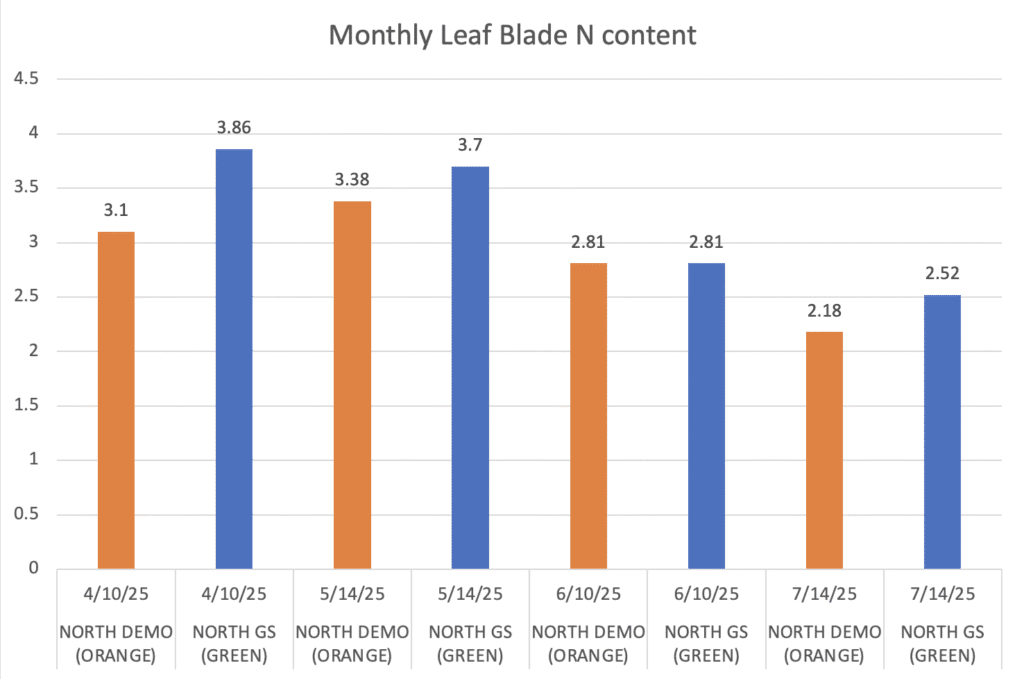
In independent studies conducted in Northern California, TILL-IT N-POWER improved leaf blade N% consistently compared to grower control (Figure 4). Monthly tissue analysis indicated a steady increase in leaf blade nitrogen content for the TILL-IT N-POWER (3 x, 10 gal/acre), maintaining consistent nitrogen uptake between 3.0–3.4% N throughout the season. Grower control standard of CAN 17 (10 gal/acre+ UAN 32 (3x, 10 gal/acre) resulted in a slow decline in leaf blade nitrogen content during early and late summer. Likewise, the improved mineral nutrition with TILL-IT N-POWER resulted in greater yield per acre in this trial (see table below).
| Factor | Net Weight (Lbs/A) | Almond Meat | Difference (%) |
| Grower Control | 14380 | 1822.82 | – |
| TILL-IT N-POWER | 15480 | 1882.70 | 3% |
TILL-IT® N-POWER® is a 27-0-0 nitrogen fertilizer stabilized with NDURE® DCD and formulated with PURIC® Technology. This almond tree fertilizer can be applied gallon for gallon to replace UAN while improving nutrient-use efficiency and reducing nitrogen leaching. It can also be applied for equivalent units of nitrogen as with UAN for increased almond yield response. It is compatible with calcium fertilizers and formulated with PURIC technology for increased nutrient use efficiency and soil water holding capacity.