
Suppress Nematodes to Improve Leaf Photosynthesis, Yield, and Grape Quality
S. Kaan Kurtural, PhD, Senior Agronomy Information Technology Manager
- Employ® supports nematode control in vineyards and helps reduce the effects of nematode feeding
- Improved leaf photosynthesis was linked to stronger yield, higher Brix, and better grape quality in multi-site trials
- As one of today’s agricultural biologicals, Employ helps support plant health, water status, and berry composition
Employ® is a biochemical pesticide that is foliarly applied and can help support nematode control in vineyards by helping plants overcome the effects of nematode feeding. In multi-year, multi-site trials, Employ was shown to improve leaf photosynthesis, plant water status, yield, sugar accumulation in berries, as well as plant secondary metabolites such as anthocyanins in black-skinned wine grapes.
Employ is a second-generation αβ Harpin protein and fits within a broader category of agricultural biologicals. These proteins are produced by many pathogenic bacteria that can signal the plant’s immune system to upregulate its defense pathways. This resulted in improved leaf photosynthesis therefore improved growth and amelioration of berry composition including greater amounts of phenolic biosynthesis.
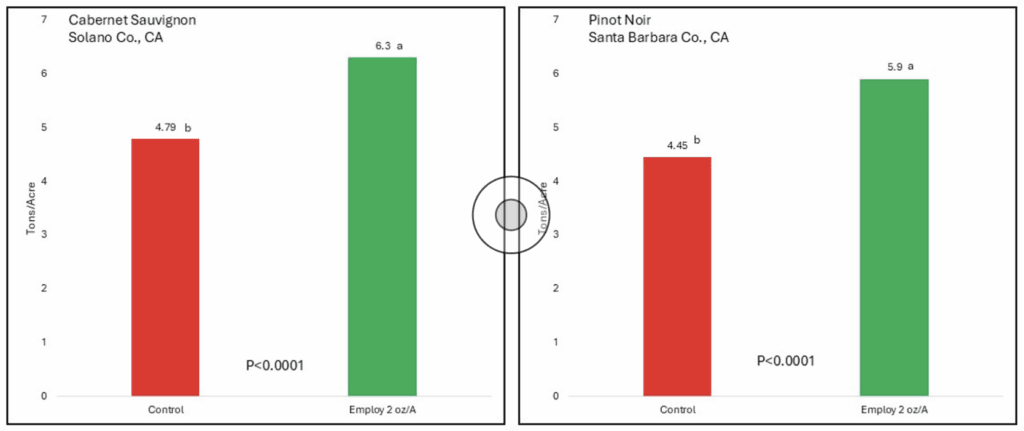
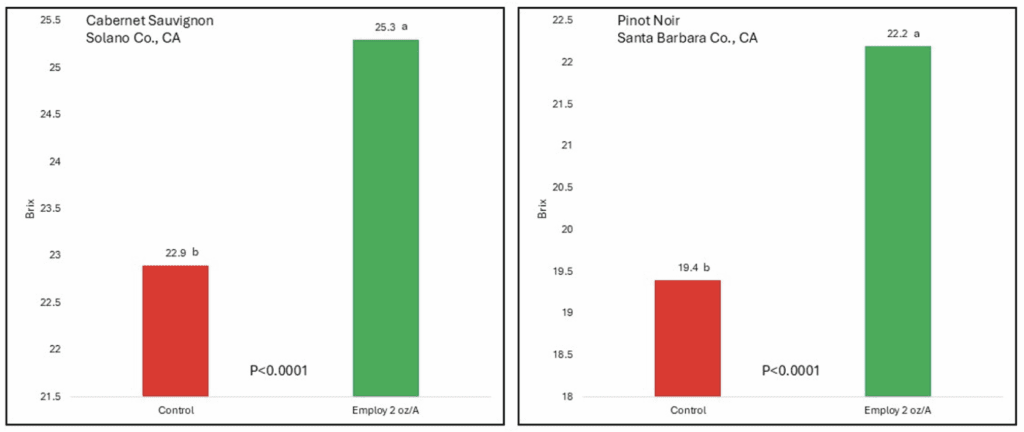
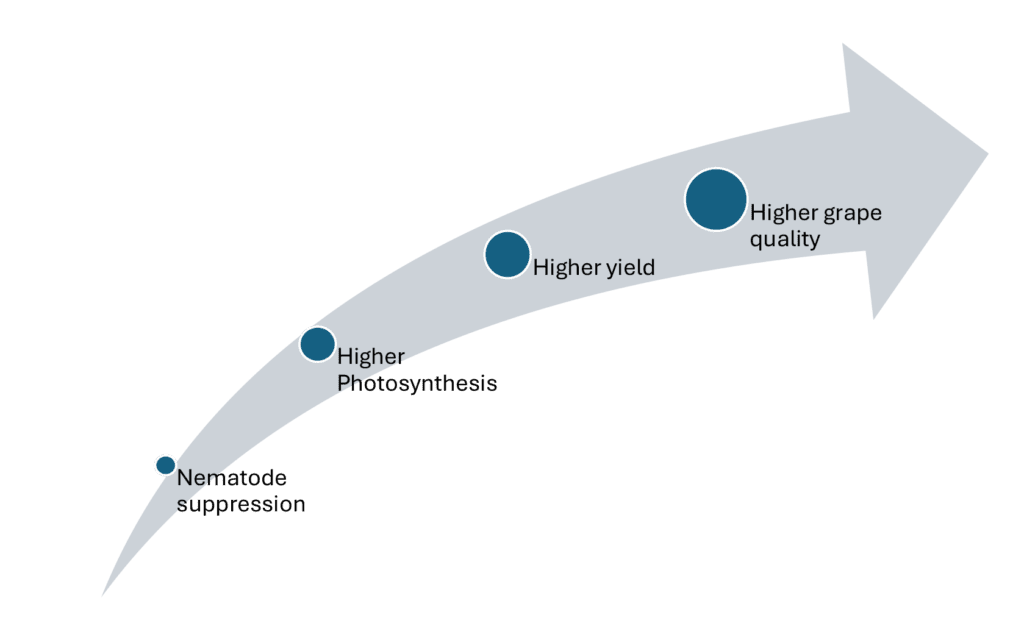
In replicated independent trials (176PS23VINCA1), the results indicated a reduction of nematode populations in the rhizosphere (Figure 1), increased leaf photosynthesis throughout the season (Figure 2), greater yield (Figure 3), higher Brix (Figure 4), and higher anthocyanins in berry skin (Figure 5) in wine grapes grown on susceptible Coudrec 3309 rootstock in California at two different sites.
Field Trials Show Improved Leaf Photosynthesis, Yield and Brix
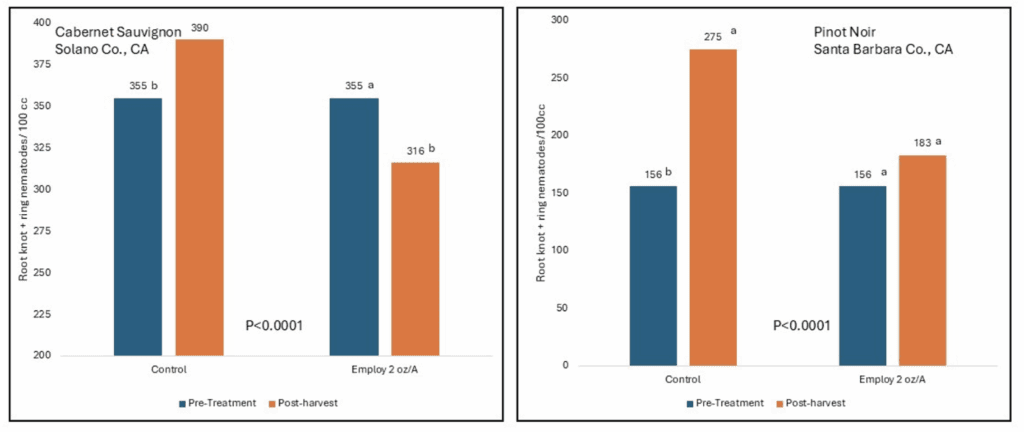
in Solano and Santa Barbara Counties in California (p<0.0001). 176PS23VINCA1
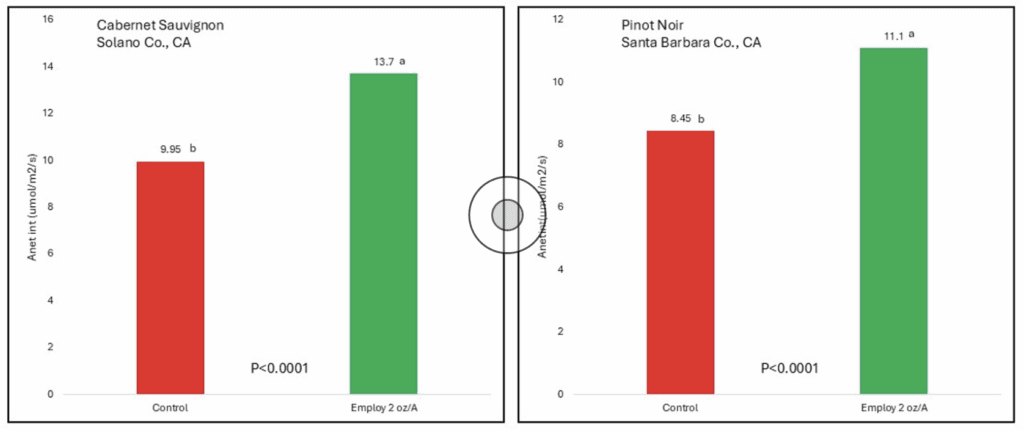
in California (p<0.0001). 176PS23VINCA1
The suppression of nematode feeding on roots of grapevines led to:
- 35% greater leaf photosynthesis
- 30% greater yield per acre
Nematode Control Supports Sugar Accumulation and Grape Quality
Greater leaf photosynthesis is associated with higher sugar export from grape leaves during ripening. Likewise, improved nematode control and higher photosynthate export were associated with greater sugar loading in grape berries.
There is a direct linear relationship between sugar accumulation in the grape berry and anthocyanin (color) formation in the skin. Likewise, due to nematode control and better sugar loading into the grape berry, higher skin anthocyanin was achieved in Cabernet Sauvignon and Pinot Noir berries (Figure 5).
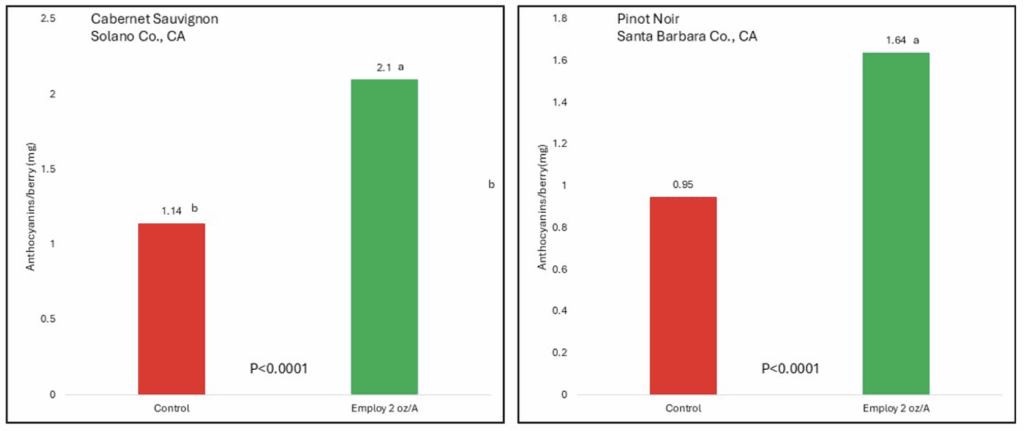
in California (p<0.0001). 176PS23VINCA1
Best Use Recommendations for Employ in Vineyards
For growers looking to improve nematode control with agricultural biologicals, Employ can be incorporated at key timings throughout the season.
| Timing | Rate |
| Post-Harvest | 2 oz/Acre |
| 3-5 mm Berry | 2 oz/Acre |
| Bunch Closure | 2 oz/Acre |
| Verasion | 2 oz/Acre |
Field comparison of Untreated Control and Employ applied at 2 oz/Acre.
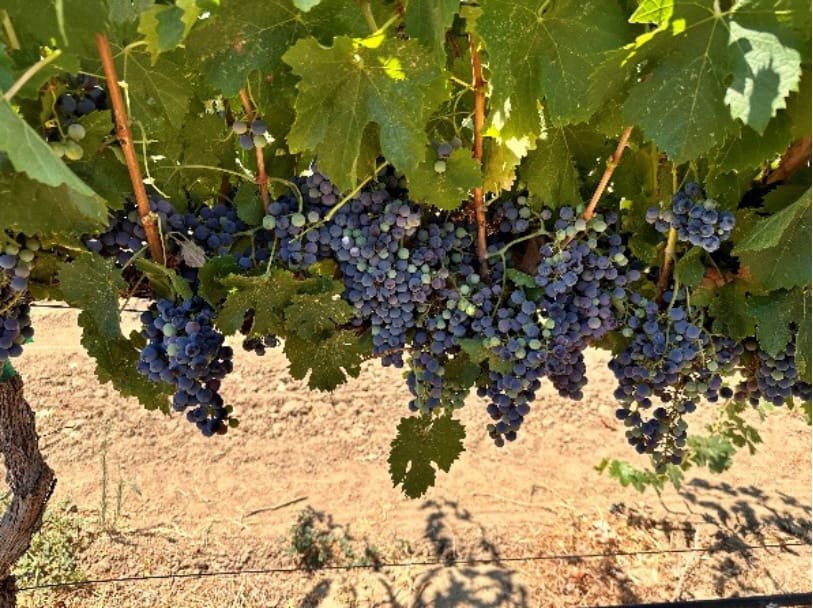
at harvest without Employ.
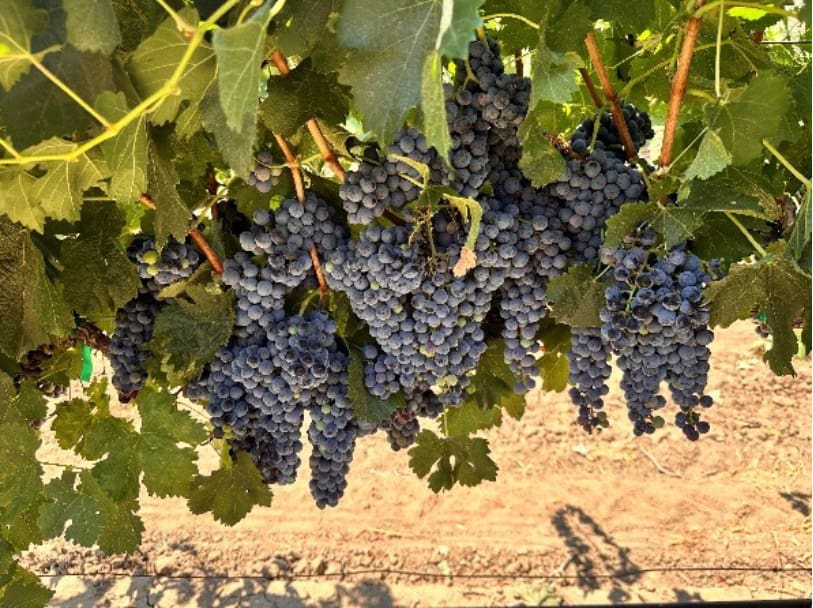
at harvest with Employ 2 oz/Acre.